Overview
Where do breaches originate? Who are the actors? What causes the largest losses? Drawing on 2024–25 breach investigations, this page examines today’s realities and explains how to design defenses that actually work.
Why Password Defense Comes First
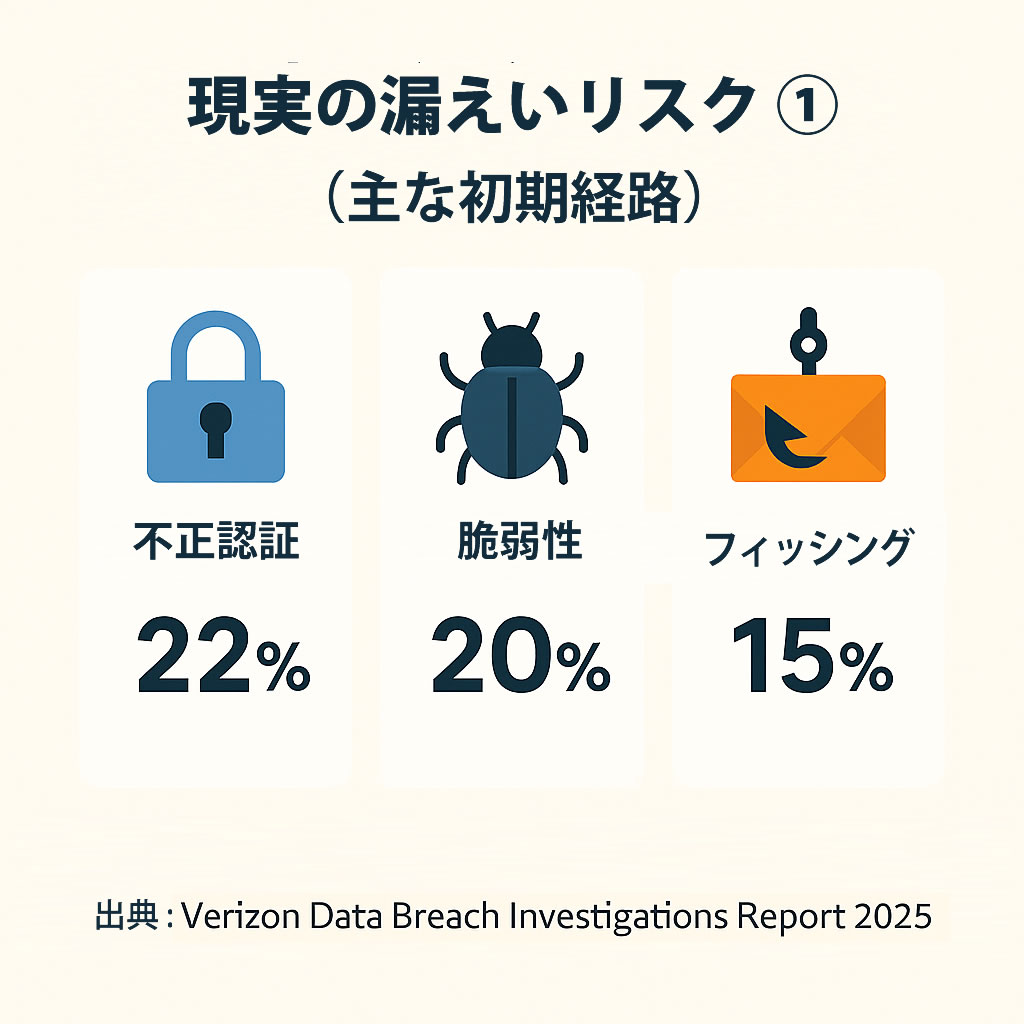
The most common initial access path in real incidents is credential abuse (stolen IDs and passwords). Once credentials are compromised, attackers often reach sensitive data quickly, so the resulting losses tend to be large. Your first priority in breach prevention should be defenses against attacks that target authentication.
The most straightforward way to prevent credential abuse is not to use passwords. POSTSPACE, operated by GumpNetworks with decades of frontline operations experience, replaces recipient passwords with key-based security for safe file delivery. With encryption keys stored only on the endpoint (and those keys are themselves encrypted), only the key holder can read the data (zero-knowledge E2EE). Even if the cloud is compromised, third parties cannot decrypt your content—your data and privacy remain protected.
The Threat Isn’t Only Outside
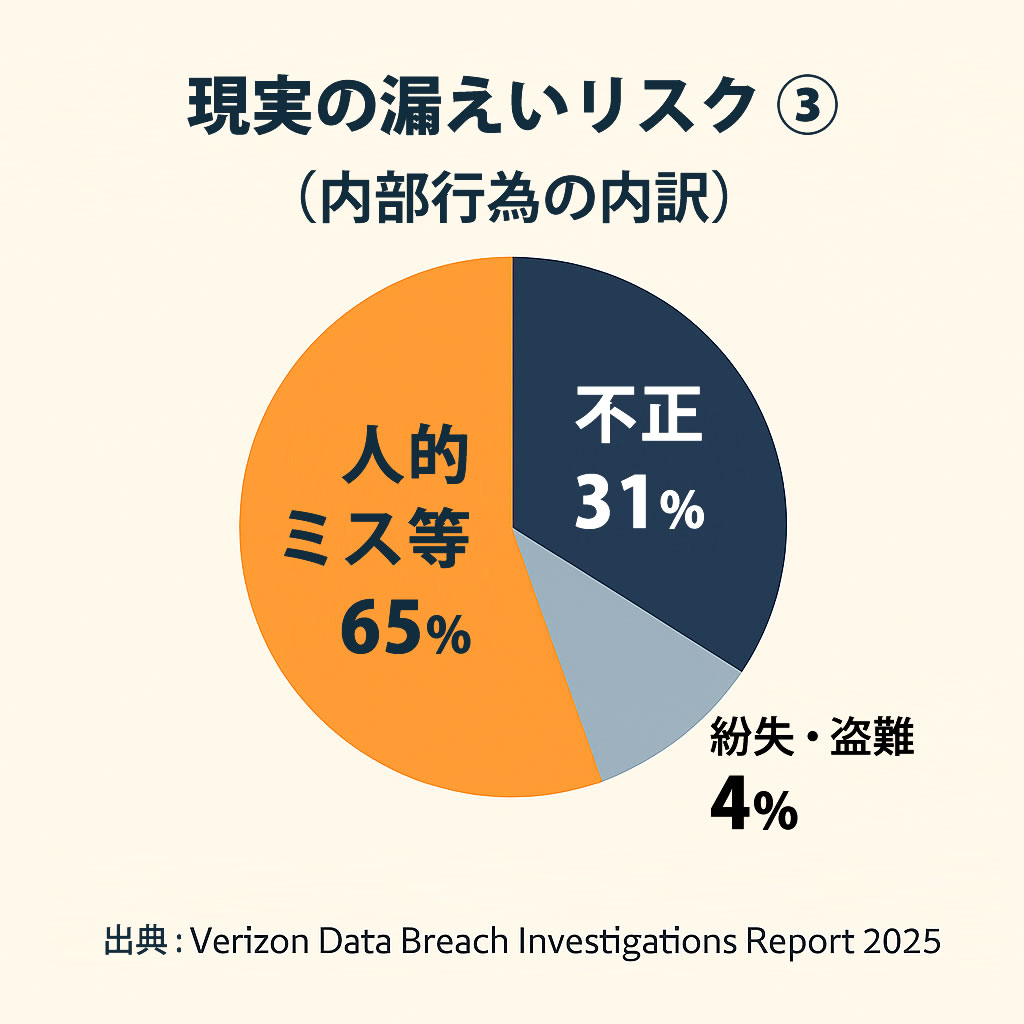
In 2025 studies, 18% of breaches were caused by insiders. Of those, 65% were human error and 31% were malicious acts. Even with strong external defenses, you cannot prevent data leaks unless you also address insider risks. Plan with insider risk as a given.

POSTSPACE is built on the premise that human error and misconduct can never be driven to zero. By focusing on systemic protection—zero-knowledge E2EE, device binding, and layered controls—it enables secure delivery that doesn’t depend on perfect human operation.
Blind Spots and Key Challenges
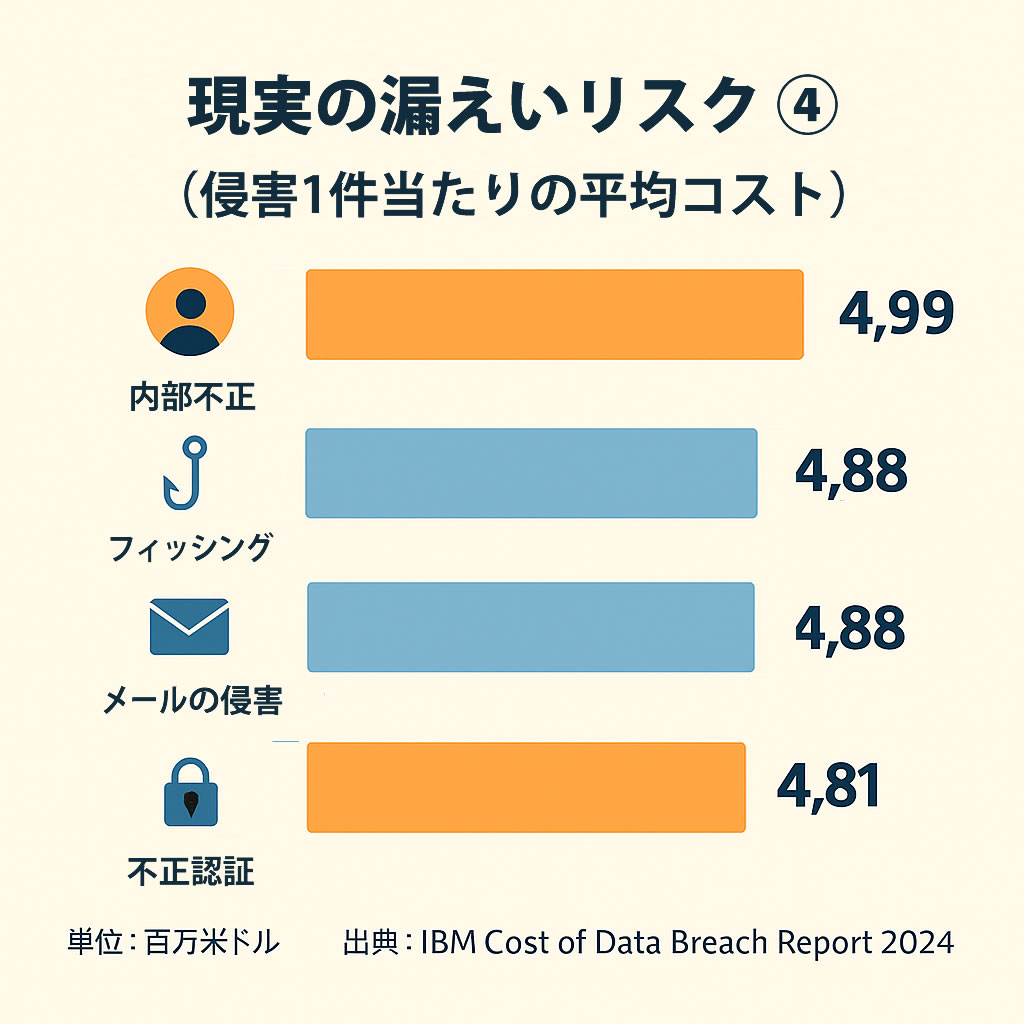
By number of cases, breaches occur in roughly this order: credential abuse, vulnerabilities, then phishing (Figure 1). By average cost per incident, however, malicious insider activity is highest (Figure 4). In Japan as well, even if insider incidents are less frequent, a single case can cause catastrophic damage. As cloud adoption disperses data across more systems, organizations must strengthen defenses against insider threats—a common blind spot.
Credential abuse also tends to cause greater losses than vulnerabilities with similar case counts, making it the largest contributor to total damage. IDs and passwords are among the highest-value targets for attackers, and should be the first and most important focus for defense.
POSTSPACE Highlights and Defense Points
Considering today’s breach landscape, evaluate a file-transfer solution designed for sensitive exchanges—POSTSPACE.
- Protects confidential data in the cloud even if any vendor layer is compromised (zero-knowledge E2EE).
- No recipient passwords. Opening the link is enough—reducing mis-sends (human error) and blocking improper re-sharing (insider risk).
- Layered security (device binding, link revocation, PIN reset, split key architecture, etc.) enables swift containment.
- Even with endpoint compromise, per-user/per-link key separation and short-lived links minimize blast radius.